


 August 14, 2026
 7
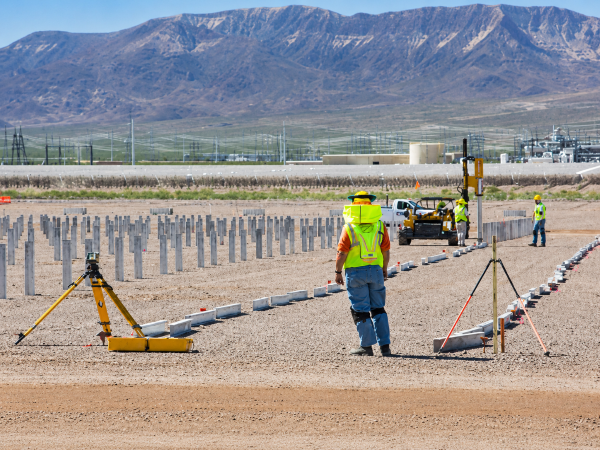
7The latest upgrades to paver 3D leveling systems are redefining construction accuracy, delivering millimeter-grade precision while eliminating traditional stringline methods and significantly reducing material waste. With infrastructure projects demanding tighter tolerances and faster completion, 3D paving control has rapidly evolved from a specialized technology to an industry standard.
Next-Generation Technologies
Modern systems integrate GNSS receivers, inertial measurement units, and multi-sensor fusion—combining ultrasonic, laser, and slope sensors—to maintain consistent mat thickness and smoothness even on curved alignments and superelevated sections. Real-time kinematic positioning enables vertical tolerances within ±2 mm, while intuitive 3D visualization interfaces allow operators to monitor paving progress against digital design models instantly.
Operational and Economic Gains
The benefits are substantial. Eliminating stringlines removes setup time and sag errors, while reducing material overconsumption by 2–3% translates to significant cost savings on large-scale projects. Rework and manual grade checking are minimized, accelerating paving cycles by up to 30% on complex jobs. Job site safety also improves by removing trip hazards and reducing the need for surveyors working near heavy equipment.
Toward Autonomous Paving
Increasingly, upgraded systems are integrated with cloud-based platforms, enabling seamless model updates from office to paver and real-time as-built documentation. Some advanced configurations incorporate machine learning algorithms that adjust compaction parameters based on mat temperature and mix characteristics—a step toward fully autonomous paving operations. As 5G connectivity and edge computing become more accessible on construction sites, remote support and predictive diagnostics will further enhance system capabilities, positioning 3D paving control as a cornerstone of digital construction worldwide.



Goldzim Construction Limited
 +86-532-8579-6777
 +86-532-8579-6777
 +86-178-6290-1191
 +86-178-6397-6609

 Suite 2503, Block A, Tsingtao Center Mansion, No. 8 Hong Kong Middle Road, Shinan District, Qingdao, Shandong, China