


 March 18, 2026
 49
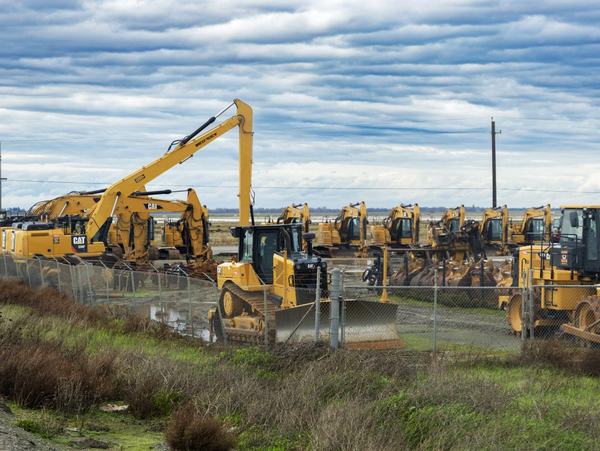
49Artificial intelligence is rapidly transforming fleet management, pushing the industry into a new era defined by automation, connectivity, and data-driven decision-making. Rather than expanding fleets with new equipment, contractors are increasingly focused on maximizing the value of existing assets.
Leading fleet management firms highlight a clear shift: success in 2026 will depend less on acquiring new machinery and more on integrating intelligent technologies into current operations. AI-powered systems now enable real-time monitoring of vehicle diagnostics, driver behavior, and route performance, allowing fleet managers to optimize efficiency and reduce operational costs.
One of the most impactful developments is predictive maintenance. By analyzing sensor data such as vibration patterns and engine temperature, fleets can detect potential failures early, significantly reducing downtime. In some cases, improved data integration alone has led to downtime reductions of up to 70%, demonstrating that operational efficiency gains do not always require heavy capital investment.
Electrification is also gaining momentum, supported by declining battery costs and growing interest in alternative energy sources like hydrogen. However, infrastructure limitations—particularly charging capacity—remain a key challenge. As a result, companies are adopting a more strategic, data-driven approach to electrification, focusing on total cost of ownership and operational feasibility.
Meanwhile, automation is streamlining administrative processes such as scheduling, reporting, and compliance documentation. Semi-autonomous technologies are gradually entering controlled environments like ports and logistics hubs, further enhancing productivity.
Ultimately, the competitive advantage in fleet management is shifting toward clean, connected, and unified data ecosystems. Companies that prioritize data integration, disciplined experimentation, and workforce training will be best positioned to capitalize on AI’s full potential.



Goldzim Construction Limited
 +86-532-8579-6777
 +86-532-8579-6777
 +86-178-6290-1191
 +86-178-6397-6609

 Suite 2503, Block A, Tsingtao Center Mansion, No. 8 Hong Kong Middle Road, Shinan District, Qingdao, Shandong, China