


 January 23, 2026
 144
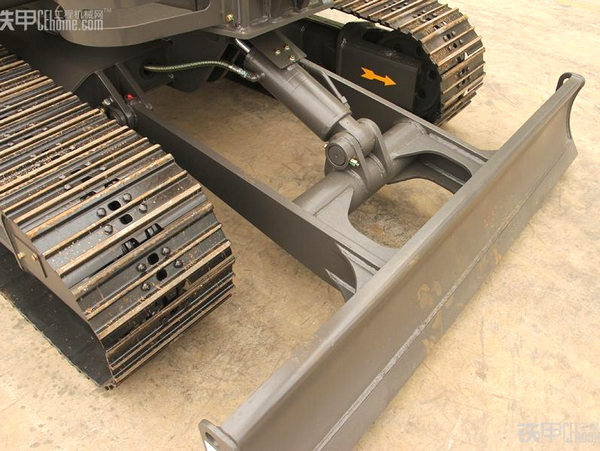
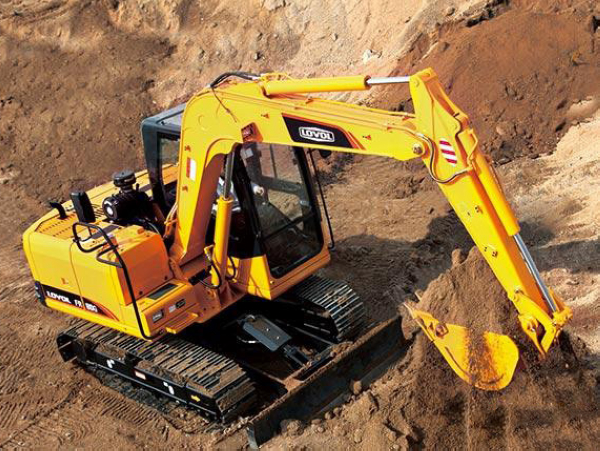
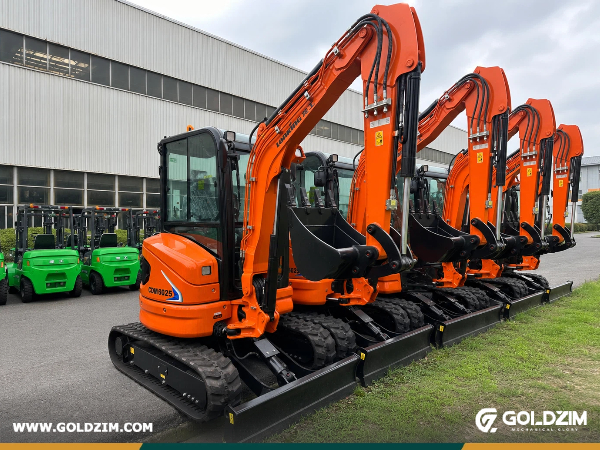
144Compact excavators are typically equipped with dozer blades. These blades utilise a pilot control system to regulate hydraulic circuits, driving the extension and retraction of the blade cylinder. This mechanism adjusts the height of the cutting edge above ground level to accommodate varying operational requirements. In practice, some operators lack sufficient understanding of the dozer blade's functionality, failing to fully leverage its performance advantages and thereby compromising construction efficiency. Proper utilisation of the dozer blade can significantly enhance overall machine stability and operational efficiency across multiple working scenarios.
1. Levelling surfaces
When travelling, position the dozer blade in the direction of travel with its lower edge flush with the track base. This enhances functions such as trench backfilling and surface levelling. In most operations, excavators fitted with dozer blades demonstrate significantly higher efficiency than those without.
2. Clearing debris with tracks suspended
After working in muddy pits, concrete, or other sticky, wet conditions, excavator tracks inevitably become caked in mud. Some fastidious operators find this unsightly. Lowering the dozer blade while simultaneously supporting the machine with the boom and dipper arm suspends both tracks, facilitating debris removal.
3. Gathering material for easier loading
At the end of each job, a small pile of material often remains difficult to scoop into the bucket. The dozer blade can be used to create a barrier, working in tandem with the bucket to clear the material.
4. Stabilising the Machine
When operating on slopes, the dozer blade proves invaluable. It can be used to stabilise the machine, prevent landslides or slipping, and level the working surface for backfilling.
5. Facilitating lifting operations
During excavator operations, tasks like hoisting mixers or concrete pipes may arise. When these objects are too heavy for the bucket alone, the machine's centre of gravity shifts towards the load, causing instability. Lowering the dozer blade noticeably shifts the centre of gravity rearwards, significantly improving overall stability.
6. Loading/unloading flatbed trailers
Here is an animated illustration for clearer understanding. Typically, the dozer blade is positioned forward when loading a trailer to facilitate unloading.
7. Facilitating Rotational Operations
When operating in confined spaces, position the dozer blade alongside the edge of an obstacle, using it as a boundary. As the dozer blade is wider than the machine body, the operator can rotate freely without concern when obstacles are behind the machine, provided they do not extend beyond the blade's position. This behaviour is akin to that of a zero-tail swing excavator.





Goldzim Construction Limited
 +86-532-8579-6777
 +86-532-8579-6777
 +86-178-6290-1191
 +86-178-6397-6609

 Suite 2503, Block A, Tsingtao Center Mansion, No. 8 Hong Kong Middle Road, Shinan District, Qingdao, Shandong, China