


 July 17, 2025
 81
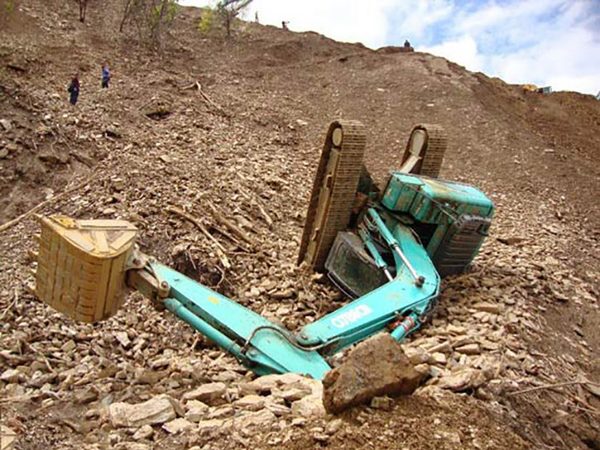
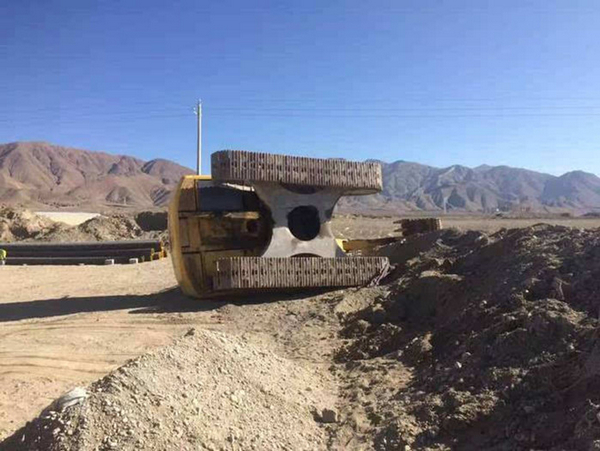
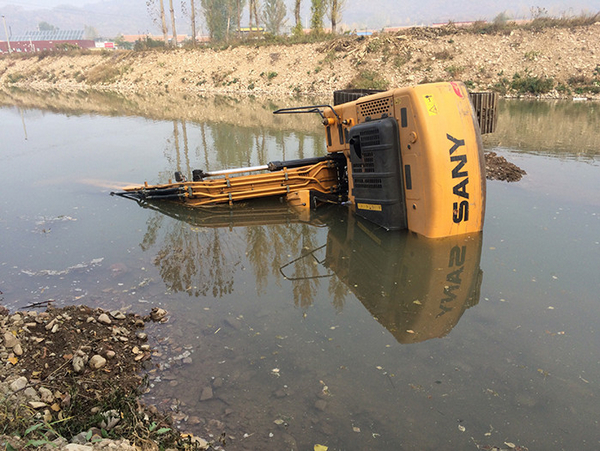
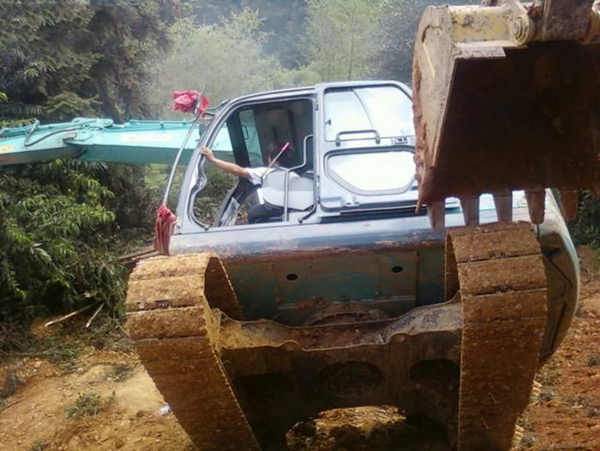
81In daily life and on forums, we often come across situations where excavators overturn during movement. We have compiled some precautions for excavators during movement, hoping that everyone can draw some reminders from them and enhance their own safety protection.
(1) Before the excavator starts moving, check the road conditions, remove any obstacles on the road, keep irrelevant personnel away from the excavator, and then raise the bucket to prepare for starting.
(2) Check the direction of the crawler frame, determine the position of the driving wheels, then honk the horn, and the excavator will slowly start moving.
(3) When an excavator is reversing, one should estimate the space behind the vehicle in advance. If the blind area is too large, a dedicated person should be assigned to give instructions and coordinate the operation from behind.
(4) The driver controls the walking speed according to the road conditions. When walking on an open and flat surface, the "1" gear can be selected. The walking speed of the excavator will automatically increase or decrease based on the working pressure of the hydraulic walking circuit. When going up or down slopes, the "0" gear can be selected, and the excavator will move at a low speed with a large torque.
(5) When the excavator is moving, it is advisable to choose a flat surface to prevent the upper rotating platform from rotating. When moving on rough ground, one should avoid rocks damaging the walking motor and the track frame.
(6) When the excavator is moving on the slope, it should travel as straight as possible; keep the bucket 20-30 cm away from the ground. If there is any slipping or tilting, immediately lower the bucket. If the engine stalls and the vehicle stops on the slope, place the bucket on the ground, set the control lever to the middle position, and then restart the engine.
(7) Try to avoid having the excavator walk in water. If it is necessary to cross the water, it is essential to thoroughly investigate the water depth and the hardness and stability of the bottom surface. It is not advisable to proceed if the water is too muddy or if the water level exceeds the tracks.



Goldzim Construction Limited
 +86-532-8579-6777
 +86-532-8579-6777
 +86-178-6290-1191
 +86-178-6397-6609

 Suite 2503, Block A, Tsingtao Center Mansion, No. 8 Hong Kong Middle Road, Shinan District, Qingdao, Shandong, China